
 Chengdu APEX Technology
Molecular sieve gas dehydration unit
Molecular Sieve Gas Dehydration Units
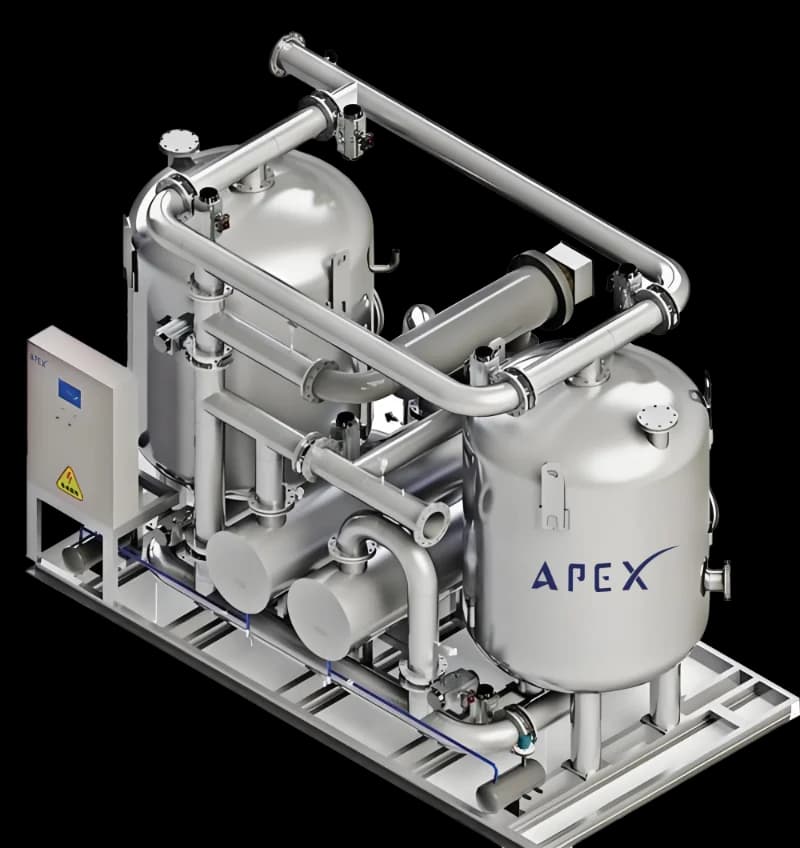
- Feed gas flow
- 10000–100000Nm3/d
- Outlet water dew point
- -70°C
- Regeneration temperature
- 200–300°C
Characteristics
3 of 3 fields · all sourced · retrieved 2026-10-24Molecular sieve dehydration is a physical adsorption technology that uses the microporous structure of molecular sieves to selectively capture water molecules, suited to deep dehydration of natural gas, biogas and organic solvents. The system uses fixed-bed adsorption towers, typically two or more, operating in cycles: while one tower dries the wet gas, the other is regenerated by temperature swing adsorption with heated dry product gas at 200–300°C, then cooled for reuse. Pneumatic valves switch the twin towers automatically for continuous operation. APEX lists a processing capacity of 10,000–100,000 Nm³/d, an operating temperature of 10–40°C and a dehydration efficiency of ≥99.5%, with operating pressure set by the gas source. Applications include natural gas dew point control and LPG dehydration, ethanol refining and drying of industrial gases such as hydrogen and helium.